Distributed, redundant, scalable
Resilient power architecture
PTE turbine systems and complementary generation, storage, controls and grid integration support dependable capacity for mission-critical digital loads.
Mission-critical systems
Powering the intelligence economy. From edge facilities to hyperscale campuses, NASG coordinates the infrastructure and services behind always-on performance.
Built around the load — reliable power, responsible water, scalable delivery.
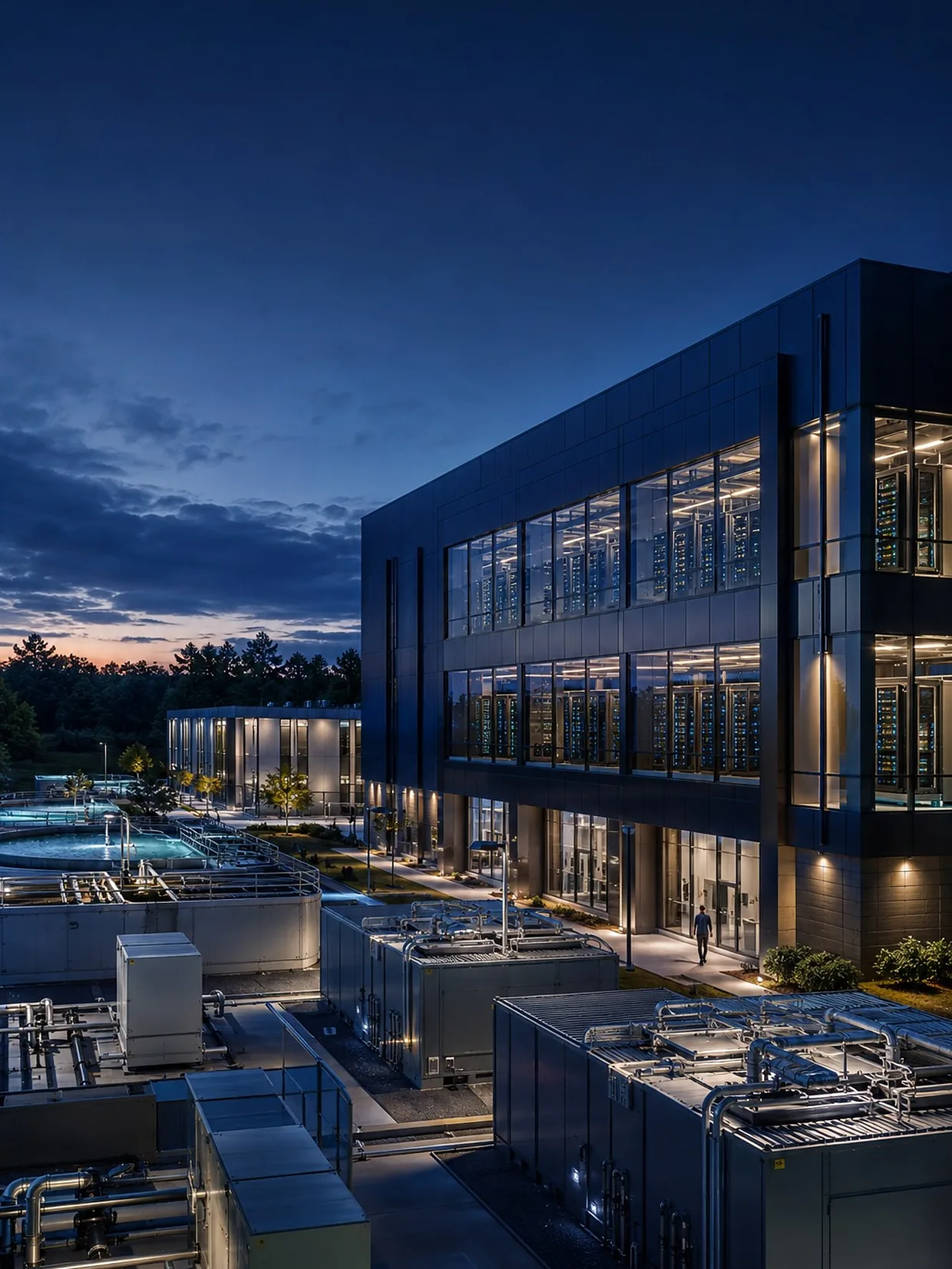
An integrated digital infrastructure platform
NASG aligns power, water, deployment, controls and professional services around mission-critical performance.
Distributed, redundant, scalable
PTE turbine systems and complementary generation, storage, controls and grid integration support dependable capacity for mission-critical digital loads.
Supply, treatment, recovery, support
Water production, treatment, recovery and thermal coordination help strengthen facility resilience and responsible resource management.
Standardized systems, faster pathways
Modular subsystems, coordinated site preparation and repeatable integration pathways support edge, colocation, enterprise and hyperscale expansion.
From site strategy through optimization
NASG supports assessment, feasibility, solution architecture, partner coordination, commissioning, monitoring and continuous performance improvement.
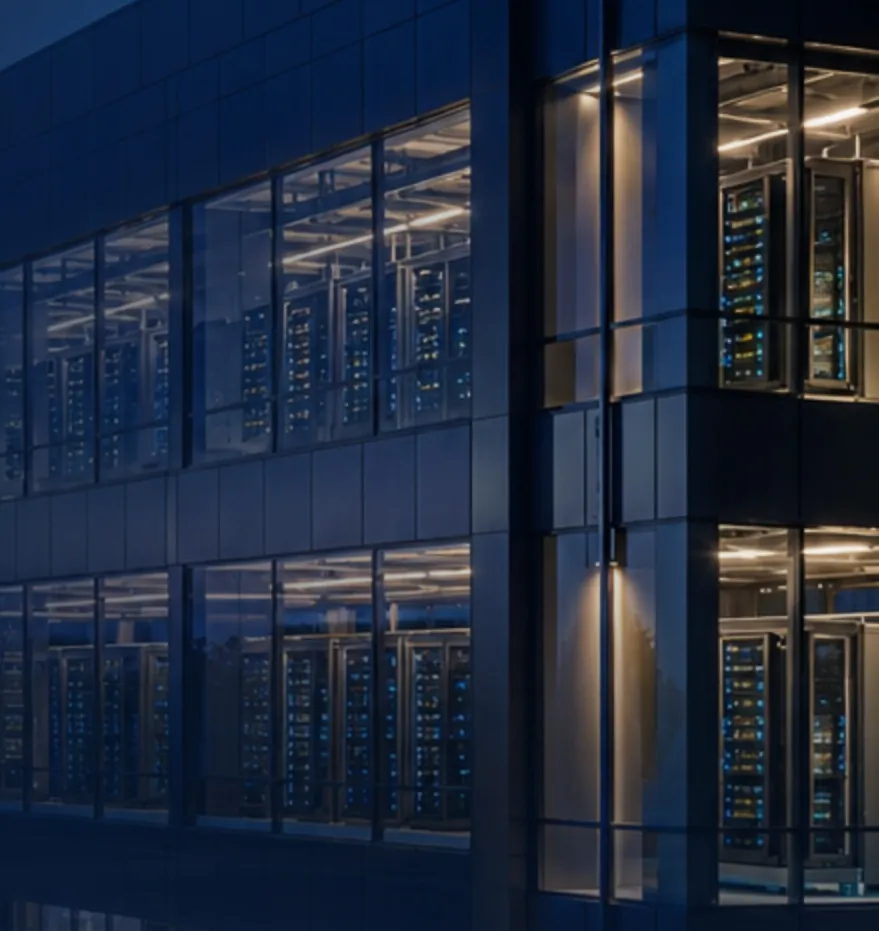
Always-on operations
Continuity for demanding digital loads, deployment pathways built for speed, infrastructure that grows with demand, and power and water planned together rather than in sequence.
The interconnect wall
Compute demand is arriving faster than the grid can be built to carry it. For a data-center developer the scarce resource is no longer capital or silicon — it is an energized connection.
US data center demand reached 61.8 GW in 2025, up 22% year over year, and is projected to reach 134 GW by 2030. Figures as published by Portable Turbine Energy, citing LBNL Queued Up 2025, ERCOT, PJM and S&P Global.
The status quo
Operators are being asked to choose between slow, dirty and sprawling. Naming the trade-off is the first step in removing it.
| Approach | What it gives you | Where it breaks |
|---|---|---|
| Wait for the grid | Cheap firm power, eventually | Five to seven years to energize; land and capital sit stranded |
| Diesel gensets | Fast to deploy, familiar | Permitted for backup only, with runtime caps, NOx and particulate limits and high fuel cost |
| Recip gas engines | Good fuel economics | About 2 MW per unit — ten or more units and a large pad to reach 20 MW |
| Curtail or throttle | Keeps the utility happy | Destroys utilization and breaks training-job service levels |
Modularity
Capacity tracks the ramp of the compute build. Units synchronise to a common island bus, so capacity is added or removed without redesigning the plant.
20 MW of firm power at the point of use, fully off grid.
Turbofan exhaust heat is captured and put back to work, not vented.
HVAC water-vapour recovery coupled with atmospheric water generators.
Carbon and NOx recaptured against Net Zero standards.
Recovered heat and water return to the process, so one system gives a site power, cooling and its own water supply. Reliability targets are 99.5% fleet availability, 8,000 hours between hot section inspections, black start to full load in under ten minutes, and 24/7 remote monitoring and dispatch.
The commercial model
Because the asset is mobile, capital follows the build-out instead of being poured into a substation the campus will only need once.
Units land on the pad and the first data hall goes live while the interconnection request is still in study.
Turbines serve primary load through the utility study, network upgrade and substation build.
Keep the units as backup and peak-shaving capacity, or move them to the next site.
Indicative modelling published by Portable Turbine Energy: gas at $4.00/MMBtu, diesel at $3.40/gal, grid at a blended firm commercial tariff including demand charges. Against a 20 MW block earning roughly $3.5M per month once energized, at $175 per kW per month, the fuel premium over grid power is small relative to the cost of waiting. Lease, power-purchase and outright sale are all available.
The integrated platform
NASG coordinates this capability with the other six — and with the strategy, partners and delivery disciplines that carry a program from decision to operation.
Infrastructure designed for always-on operations
NASG professional services
Site strategy · feasibility · solution architecture · partner coordination · commissioning · optimization
One partner · Connected solutions · Enduring impact
Whether the opportunity is a single facility, a critical infrastructure upgrade, or a multi-market program, NASG can help shape the pathway forward.